


On 27 January 2026, the news sent a chill through French politics. Former senator Joël Guerriau was found guilty of drugging his colleague, MP Sandrine Josso, with MDMA with the aim of committing a sexual assault. The Paris criminal court sentenced him to four years in prison, of which 18 months to be served, along with a five-year ban on holding any public office and an obligation to undergo treatment. For the victim, who courageously reported the facts, this verdict is an immense relief and a first step towards rebuilding. The Guerriau case tragically illustrates how drink spiking (often associated with nightlife settings) can also strike at the heart of the Senate and the highest circles of the Republic.
Beyond the shock and outrage, this extraordinary case raises many questions. How did an elected official aged 68, a former banker and centrist figure from Loire-Atlantique, come to commit such an act? What lessons can be learned to prevent future tragedies? In this article, we analyse the context of the case, explain clearly what drink spiking is, and explore the political and societal implications of this emblematic case. We also cover the vigilance habits to adopt and put the spotlight on the CYD drink spiking test kit, a practical prevention tool for protecting yourself, before concluding on the importance of awareness and empowerment in the face of this scourge.
The case in context
The events date back to autumn 2023. On 14 November 2023, Sandrine Josso, MP for Loire-Atlantique (then a member of the MoDem group), went to a private dinner at the home of Joël Guerriau, a centrist senator from the same département. Surprised to find herself alone with him in his official flat, she accepted a glass of champagne that her host poured for her. What she did not know was that the bottom of her glass had been coated with MDMA, a synthetic drug also known as ecstasy. Soon, the MP felt intensely unwell: dizziness, nausea, confusion. She later described seeing the senator stare at her “insistently”, afraid to show her weakness because the situation seemed so dangerous. Out of survival instinct, Sandrine Josso cut the evening short and managed to leave before the worst could happen. She then went to hospital, where tests confirmed the presence of ecstasy in her system, and then filed a complaint, triggering the investigation.
Joël Guerriau, arrested the next day, at first claimed it was “inadvertence”. He alleged that he had poured the drug in by mistake, blaming a “bad game” of testing substances, and insisted he never had any intention of raping his colleague. However, this absurd line of defence did not withstand the investigation. Investigators found worrying internet searches on the senator’s phone about how to obtain GHB or ecstasy, as well as about the effects and risks of these narcotics. In addition, the quantity of MDMA administered was “far above the recreational level”, a sign of an intent to seriously impair the victim’s judgement. All of these elements point to the premeditation of a sexual assault.
The trial opened in January 2026 in a packed courtroom at the Paris judicial court. Over two days of hearings, Joël Guerriau maintained his accidental version of events, while the civil party and the public prosecutor methodically dismantled his arguments. The offence he was charged with (defined by the law of 3 December 2018, known as the Schiappa law, as “the administration, without a person’s knowledge, of a substance liable to impair their judgement or control of their actions, with the intention of committing rape or a sexual assault”) was created specifically for this type of situation. Ironically, the former senator had himself voted for this law in 2018, without imagining that it would one day apply to him.
After 4 hours 40 minutes of deliberation, the verdict came early on the evening of 27 January 2026. Joël Guerriau was found guilty on both counts (possession of narcotics and deliberate administration of a harmful substance for a criminal purpose) and sentenced to four years in prison, eighteen months of which are to be served. Given his age and the absence of previous convictions, the court issued a committal warrant with deferred effect: in plain terms, Guerriau remains free pending a possible appeal trial. The request to enter him on the sex offenders register (FIJAIS) was dismissed, but the five-year ban on standing for election was upheld, marking the end of his political career.

In the courtroom, Sandrine Josso listened to the judgment with emotion. For the 50-year-old parliamentarian, the stakes went beyond her own person: “I wanted this trial to help carry the fight against drink spiking beyond my own case,” she said in essence. Her courage in breaking the silence is all the more commendable given that she has paid a heavy personal price. As her lawyer pointed out, the MP has been through a “difficult journey” since the events: six months of sick leave, intensive medical and psychological follow-up, heavy treatments, and a knot of fear in her stomach each time the trauma resurfaces. Even though no physical assault took place that night, the consequences for the victim are very real and lasting, illustrating the seriousness of this kind of insidious assault.
What is drink spiking?
Drink spiking: the term describes drugging a person without their knowledge (or under duress) in order to commit a criminal offence, most often a sexual assault or rape. It should not be confused with chemical vulnerability, where the attacker takes advantage of the victim’s drunkenness or voluntary intoxication to act. In both cases, the aim is the same: to deprive the person of their consent and their means of defence. Legally, although the term “drink spiking” does not appear as such in the French Penal Code, this modus operandi is fully covered by the law (Article 222-30-1) and is an aggravating circumstance when it accompanies a sexual offence.
Contrary to popular belief, the date rape drug is not limited to GHB. In reality, more than a hundred psychoactive substances can be used to subdue a victim. These include medicines diverted from their intended use (sedatives, sleeping pills, anxiolytics, antihistamines, opioids…), but also recreational drugs such as ketamine, MDMA, cocaine, and scopolamine (a substance with dissociative effects, sometimes called “devil’s breath”). Attackers generally favour colourless, odourless products that are easy to hide in a drink and that act quickly.
The effects on the victim are formidable. A few minutes are enough for sudden drunkenness, dizziness, nausea, intense confusion or disorientation, even a total memory blackout leading to loss of consciousness. These symptoms (which are not very specific) can be mistaken by those around for plain old drunkenness, which leaves the attacker free to act. In reality, they result from the action of the substances on the brain, causing drowsiness, inhibition of defensive reflexes and partial or complete amnesia of the event. This “zombie” effect is precisely what attackers are looking for, to neutralise their prey and make any resistance impossible. Then, by erasing the victim’s memories, they make a later complaint considerably harder (the person wakes up disoriented, not knowing what happened, with blurred or absent images).
It is difficult to estimate the exact scale of the phenomenon, because many cases are never reported. Out of shame, doubt (was it accidental intoxication?) or lack of evidence, many victims stay silent. Nevertheless, addictovigilance specialists have observed a worrying increase in drink spiking incidents in recent years. Every year in France, there are hundreds of reports of suspected drink spiking, and at least a hundred cases are formally confirmed by toxicological analysis. In 2023, for example, 127 people were implicated in a drink spiking case, a constantly rising figure. These statistics are only the tip of the iceberg, but they are enough to describe drink spiking as a “genuine public health issue” according to judicial experts.
Political and societal implications
The Joël Guerriau case hit the Palais du Luxembourg and the National Assembly like an earthquake. That a sitting senator (a member of the Senate Bureau and vice-chair of the Foreign Affairs Committee, moreover) could abuse a colleague’s trust in this way highlights a terrifying abuse of power. This case casts a harsh light on the persistence of sexist and sexual violence in politics, a world that is nevertheless governed by apparent codes of honour and respect. Reactions among elected officials ranged from shock to disgust to soul-searching: how can we ensure that the institutions of the Republic are exemplary if even a senator could commit such a serious act?
Politically, the case is almost symbolic. During the trial, the prosecutor underlined the paradox of “a senator who himself voted for the 2018 law” that punishes drink spiking, and who finds himself tried under that very law. The prosecution hammered home that “it is Mr Guerriau’s conviction that will best serve the cause of the fight against drink spiking” (a way of recalling that no one is above the law, and that justice must be exemplary, including when an elected official fails in his duties). This strong message aims to restore public trust in institutions, by showing that they know how to punish their own members in cases of serious misconduct.
For Sandrine Josso, the case took on a campaigning dimension. Determined that her ordeal should help others, the MP made her story public very early on. From 2024, she became involved in raising awareness of drink spiking in Parliament. In her dual capacity as victim and elected representative, she spoke about her case to break the taboo and promote stronger prevention measures. Her fight follows in the wake of the speaking-out started by movements such as #BalanceTonBar (which denounced cases of GHB in bars) or #MeTooGHB. These campaigns brought the reality of these silent assaults to light and prompted the government to react: a national anti-GHB plan has been rolled out and trials are under way to make date rape drug screening more widely available.
More broadly, the Guerriau case opens the debate on safety in the workplace and the need for greater vigilance, including in hushed settings such as Parliament. It also reminds us that victims of this type of assault can be anyone: a student at a party, a young woman in a bar, but also a seasoned MP at a working dinner. Shame and self-censorship must change sides. By daring to speak, Sandrine Josso encouraged other victims to come forward and made many potential witnesses (colleagues, staff, administrative personnel) more alert to weak signals. Her commitment, backed by several fellow parliamentarians, argues for a change in mindsets in the chamber and beyond, so that no victim ever has to face this kind of ordeal alone.
Prevention and vigilance habits
In the face of the invisible threat of drink spiking, prevention is more important than ever. Everyone, individually and collectively, can adopt vigilance habits to reduce risks on nights out or dates. Here are some essential tips:
- Never leave your drink unattended. If you have to step away, entrust it to someone you trust or, better still, finish it before you go.
- Avoid accepting drinks from strangers or from acquaintances you do not trust absolutely. At parties, serve yourself as much as possible, and prefer individual bottles or cans that you open yourself.
- If you drink alcohol, do so responsibly and stay alert to any unusual changes in how you feel. An abnormally fast sense of drunkenness, or one out of proportion to what you have drunk, should set off alarm bells.
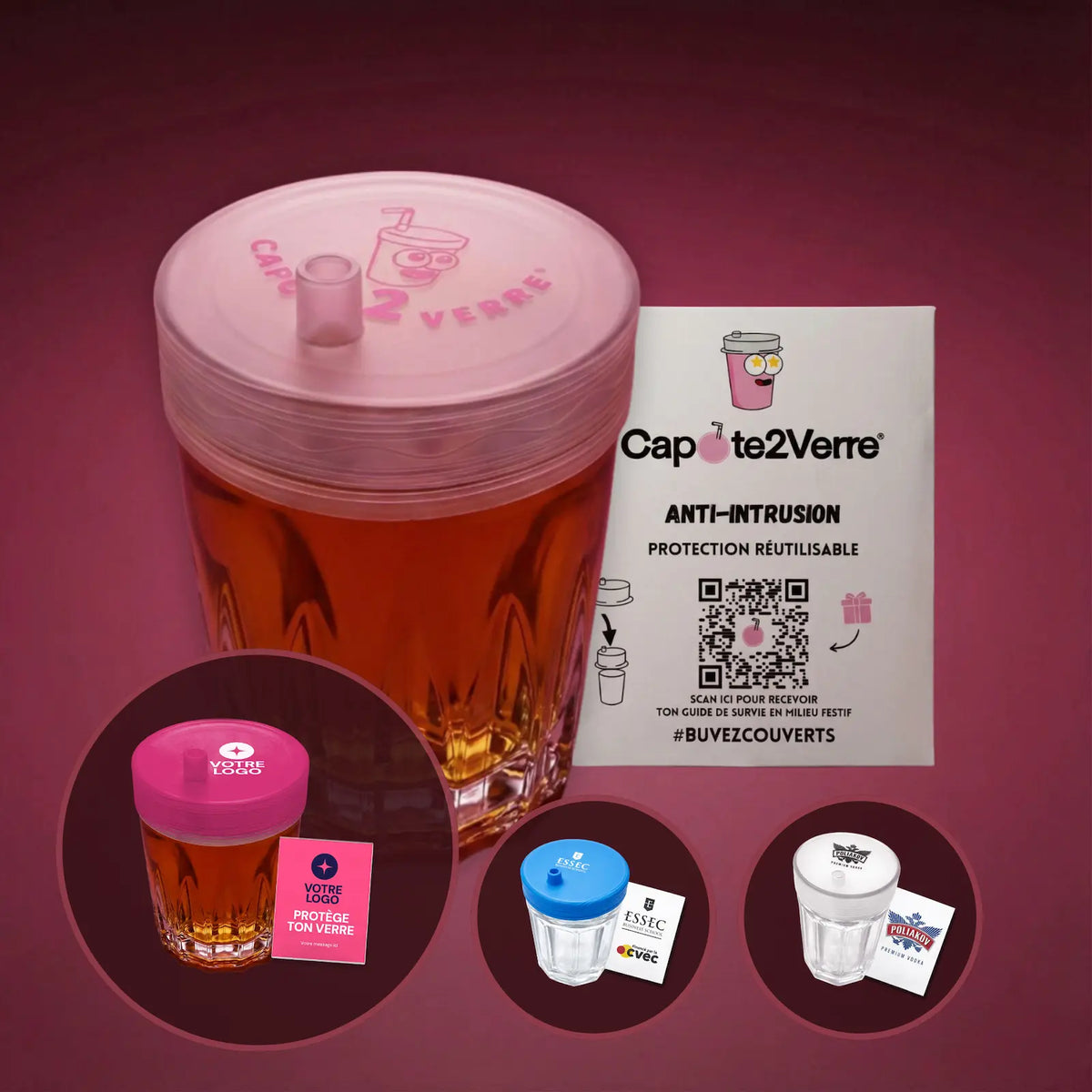
- Use protective devices for your drinks. For example, there are reusable drink covers (such as the anti-spiking drink cover) that fit over the cup to prevent anything suspicious being slipped in. This type of tool, discreet and simple to use, adds a physical barrier against attempts to poison your drink.
- Look out for each other among friends. If you go out as a group, set up a “buddy system”: keep an eye on one another, and agree never to let a friend who is in an abnormal state go home alone with a third party. If one of you shows incoherent behaviour or feels unwell, step in immediately.
- If you have unexplained symptoms (sudden dizziness, intense drowsiness, confusion…), do not stay isolated. Tell a friend or the venue staff, or call the emergency services. If you witness someone in difficulty showing these signs, do not leave them alone: they may be a victim of drink spiking.
- If you think you have been drugged without your knowledge, it is crucial to act fast. Call the emergency services (dial 17 or 112) and explain the situation. A medical examination must be carried out as soon as possible to perform toxicology tests (blood test, urine analysis). Some substances disappear from the body within just a few hours (for example, GHB is generally no longer detectable beyond 12 hours after ingestion. The sooner you seek medical help, the greater the chances of detecting the substance and gathering evidence).
- Make a formal police report as soon as possible, ideally bringing the medical results. Even if your memories are blurry or incomplete, your statement and the test results are usable evidence. Law enforcement is increasingly aware of this type of assault; your action can not only move your own case forward, but also help push back against this criminal modus operandi.
These precautions aim to reduce risks, without making victims responsible for what they suffer. Let us remember that, ultimately, only the attacker is guilty. By adopting these good habits, we simply give ourselves an additional line of defence against a diffuse danger. Fortunately, prevention does not stop there: innovative tools have recently emerged to help everyone check that their drink is safe. Among them, one device stands out: the CYD drink spiking test kit.
CYD drink spiking test kit: an innovative prevention tool against drink spiking
Among the range of anti-spiking solutions, the CYD drink spiking test kit (Check Your Drink) is becoming an increasingly popular safety reflex. What is it? It is a simple, fast and reliable drink spiking test that lets you detect in a few seconds the presence of drugs in a drink. Designed by a young French company determined to fight this scourge, the CYD test comes as small reactive strips that are easy to carry (you can slip them into a pocket or wallet). It could not be simpler to use: just place a drop of the suspect drink on the test areas, then observe the result.
In practice, each CYD strip includes two chemical indicators. If either one changes colour (turning blue, orange or grey), it means the drink potentially contains an illicit substance. The screening covers a wide range of date rape drugs: GHB of course, but also ketamine, cocaine, MDMA, scopolamine (used for its hypnotic effect), as well as other compounds from the amine family. All of this without any specific equipment and with a near-instant answer (in under 2 minutes, the user knows where they stand. If the strip does not react, there is a good chance the drink is safe; otherwise, it is better not to drink it and to alert those around you).
The value of the CYD test lies as much in its ease of use as in the reassurance it gives. Knowing that you can check your drink at any time gives consumers a certain power to act. This tool does not replace human vigilance, it complements it. For example, it is entirely feasible, in a bar or at a party, to discreetly test your drink if you have any doubt, without having to bother anyone. This democratisation of rapid testing helps deter ill-intentioned individuals: fear changes sides, because a potential attacker will know that their victim could detect their scheme on the spot.
Initially adopted in party and community settings, the CYD test is gaining visibility. Today, many players are building it into their prevention measures: some pharmacies offer it self-service, local authorities hand it out at festivals or public events, student and health associations have added it to their arsenal, and even bars/clubs are starting to make it available to their customers. Feedback is encouraging: testimonials report assaults that were probably avoided thanks to the CYD test, abnormal situations reported to the authorities in time, and an increased sense of safety among users. Of course, this test is not meant to replace careful behaviour: it is an additional safety net, which can prove decisive.
Why talk about the CYD test now? Because its arrival coincides with a collective awakening to the scale of the problem. In recent years, and in particular since 2022-2023, media attention around needle attacks in nightclubs and tampered drinks has exploded. The authorities have taken up the subject: in autumn 2024, the French government even announced a trial of reimbursement of detection kits of this type by the national health insurance system (Assurance Maladie), so that anyone suspecting drink spiking can quickly access a reliable test, even without filing a complaint. In this context, the CYD test is a practical and reassuring response to a growing societal anxiety. Accessible to all for a few euros, compact, compliant with European standards and available with fast delivery, it democratises self-defence against insidious drugs.
The CYD range is already available online, notably on the Capote2Verre site, individually or in packs of several tests. Its low cost means everyone can have one on them on a night out, just as you would carry contraception or a breathalyser when the circumstances call for it. The aim is not to sink into paranoia, but to empower potential targets by giving them the means to protect themselves and to check for themselves. In this respect, the CYD test fits fully within a harm reduction approach, promoted by health authorities and grassroots associations.
Conclusion: awareness and empowerment
The Joël Guerriau case (beyond its sensational side) must be an opportunity for a salutary wake-up call. It reminds us that the fight against drink spiking concerns us all and that it requires raising awareness among as many people as possible. Every citizen, every player in the nightlife world, every institution has a role to play in stemming this phenomenon. Talking about these cases without downplaying their seriousness already breaks the cycle of silence that plays into the hands of attackers. By informing people about the risks, by training professionals (bar staff, police officers, medical staff…) to spot the signs, by encouraging victims to speak out and report, we strengthen the protective ecosystem around potential targets.
Empowerment is the other watchword of modern prevention. It is about giving individuals back the power to act in the face of insidious dangers. Vigilance habits and tools like the CYD test offer this ability to regain control of a situation that would otherwise be completely beyond us. Knowing that you can protect yourself, check, and raise the alarm quickly is a way of regaining a form of peace of mind in social or professional settings that should never be synonymous with anxiety.
In 2026, thanks to Sandrine Josso’s courage and the media coverage of her story, drink spiking is no longer a hidden subject. On the contrary, it is now identified as a major societal issue, treated with the seriousness it deserves. The justice system sent a strong signal by convicting an attacker, whatever his social status, and by explicitly recognising the criminal intent behind the act. It is a message of hope for victims: that their voices will be heard and that their attackers, unmasked, will have to answer for their actions.
That said, the fight goes on. Fear must change sides: thanks to information, social cohesion and new prevention solutions, it is predators who should fear being spotted, stopped in time and punished. Potential victims, by contrast, need support, a listening ear and tools so that they no longer have to suffer passively. Every night out that passes without incident, every assault avoided thanks to an act of vigilance or a preventive test, is a collective victory.
The case of former senator Guerriau will have served as a wake-up call. It sheds new light on a danger that is everywhere but has long been downplayed, while showing that it is possible to tackle it through the law, education and innovation. Let us turn this outrage into action: let us inform those close to us, look out for one another, equip ourselves if needed, and never hesitate to report suspicious acts. This is how we will manage to build a safer environment for everyone, where neither an MP nor any other citizen will have to fear raising a glass to make a toast.
(Written in a spirit of awareness and responsibility, this article aims to inform without sensationalism and to encourage everyone to protect themselves and others. Because together, we can push back against drink spiking.)
🎁 Get 10% off your anti-spiking drink covers!
For your end-of-year parties, equip yourself smartly with our anti-spiking drink covers. Use the promo code: CAPOTE2V10
Claim my discount now